 Save Uyghur:
SUMMARY: Justice For All reaffirms its support for Nuclear Abolition Day, calling for a world free…
Impact Report 2025: Year in Review
2025 marked one of the most ambitious years in Justice For All’s history. From international advocacy to grassroots mobilization, from Refugee Education hubs to Capitol Hill policy wins, our work reflected a multi-level strategy to confront genocide, uplift the oppressed, and build enduring coalitions for justice.
Below is a consolidated overview of the team’s key achievements across our six core areas of work: global advocacy, ground-level engagement, U.S. policy influence, media impact, organizational development, and interfaith coalition-building.
1. Global Advocacy & International Mechanisms
UN Engagement & Submissions
- Submitted reports to UN Working Groups on Business & Human Rights, Food Security, and Forced Labor (Save Uyghur campaign).
- Held over 25 advocacy meetings with UN representatives for Palestinian Rights, Gaza, Rohingya, Uyghur, and India-related human rights concerns.
- Coordinated the first-ever Rohingya Genocide Commemoration Day at the UN, including a side event with Rohingya leaders and a formal resolution.
- Engaged the President of the UN Security Council in diplomatic briefings.
International Coalitions
- After multiple rounds of review, JFA was admitted as a full member of the Coalition for the International Criminal Court (CICC).
- Appointed to the officially recognized CoNGO Substantive Committee on the Elimination of Slavery, Colonialism, Racism, Xenophobia, and All Forms of Injustice, co-chairing the Islamophobia Working Group.
- Arslan Hidayet and Hena Zuberi serve on the Steering Committee of the End Uyghur Forced Labor Coalition.
- Representing Justice For All, Hena Zuberi serves as a Member of the International Religious Freedom Roundtable, & co-chairs the India Working Group, alongside Rev Peter Cook and Kavneet Singh. The Roundtable meets every Tuesday and the India Working Group meets biweekly.
Foreign Delegations
- Conducted diplomatic visits to Qatar, the UK, Türkiye, and Bangladesh deepening international partnerships and frontline alignment
- Built the working group of international leaders for Human Rights. The work resulted in several actions taken independently by local organizations and leaders in different countries that were represented
National Coalitions
- Continued with coalition work for Uyghur & India, adding strength to different organizations working on the causes.
- Built a coalition against the proposed non-profit killer bill
- The Feed Gaza coalition (more detail in Palestine section), initiated and funded by Justice For All, reached approx. 1 1/2 million evangelical Christians, encouraging them to speak for Palestinian rights
2. Human Rights Campaigns
Rohingya (Burma Task Force)
> 60 million in aid secured
Justice For All team attended the International Religious Freedom (IRF) Summit in Washington DC. In discussions held with Amb. Sam Brownback we impressed upon him the need to engage the current Trump administration on Rohingya. He in turn advocated with V.P. JD Vance, which has resulted in >$60 million in aid allocated
High level delegation to Cox’s Bazar
Imam Abdul-Malik Mujahid led a high-level interfaith delegation to the camps, meeting with women leaders, teachers, and displaced families. Delegation members included Ms. Nadine Maenza and Richard Reoch. The findings directly influenced the design of our Rohingya Education Hubs initiative.
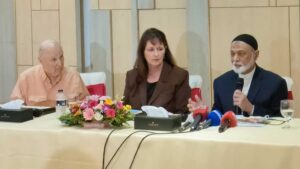
https://bdnews24.com/bangladesh/a2d18cd9118d
Rohingya Women’s & Education Reports
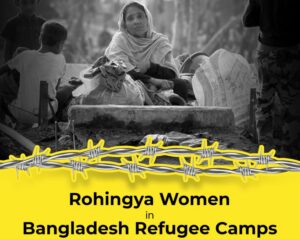
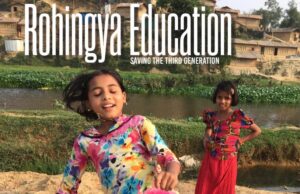
Based on data collected from 1000 respondents, the report captured original, gender-disaggregated data on food insecurity, education, safety, and psychosocial well-being. The data is now guiding programmatic recommendations to U.S. and Canadian policymakers. Additionally a second report on Rohingya Education and the crisis effecting more than 500,000 children paved the way for online education hubs.
Education Hubs Initiative
A recent Memorandum of Understanding signed with Bangladesh’s Refugee Relief & Repatriation Commission (RRRC) has secured commitments for up to ten 6,000 sq. ft. structures (approx.) with full electrical power and broadband internet access. These will serve as online education facilities for children in the camps and represent the first time that proper structured education would be available for Rohingya. Justice For All, seeking partners in this has initiated curriculum partnerships with Bayaan Academy and Al Huda Global for faith-enriched online learning
Palestine
Led advocacy during the year of genocide in Gaza, including:
- Mobilizing coalitions and grassroots pressure on ceasefire legislation
- Producing famine-awareness briefings
- Training U.S. Muslim communities in policy advocacy and narrative framing
- Visiting Palestinian detainees in ICE facilities and meeting survivors such as Mahmoud Khalil
Media Watch
Issued more than 280 alerts for media misrepresentation. The resulting action has changed 4 stories on Palestine so far. In addition, we continued our ICC submissions toolkit continued to have filings made (see Media section below).
Congressional Advocacy:
- Trained thousands of volunteers through Advocacy and organizing trainings, Justice Circles and NextGen leadership programs.
- Supported efforts to pass legislation recognizing the genocide in Gaza.
Honoring Dr. Naledi Pandor:
Dr Pandor is a thinker; an asset the Ummah needs more than ever. She is already imagining what a free Palestine will look like and encouraging Palestnians in Palestine and the diaspora to put it down on paper. What will civic society look like, what will the new constitution be? She understands that unless you strategize you will not win. That is the reason why Justice For All brought her to the United States
Her leadership in South Africa, encouraged her colleagues and convinced them of the need for action against Israel at the International Court of Justice. Her leadership continues and her collaboration with Justice For All has opened avenues with other countries.
 Save Uyghur:
In 2025, China’s repression of Uyghurs continued unabated and, in some cases, intensified. Our work helped push governments, institutions, and the public to respond with greater clarity, urgency, and accountability.
Strengthening U.S. Law and Policy
Through sustained advocacy we saw meaningful progress in U.S. policy. The extension of the Uyghur Human Rights Policy Act beyond its original 2025 expiration ensured that Uyghur protections remain a standing U.S. priority. We also welcomed major bipartisan momentum in Congress, including passage of the Uyghur Policy Act in the House and introduction of several critical bills: the Uyghur Human Rights Protection Act, the Preventing the Forced Return of Uyghurs Act, and the Uyghur Genocide Accountability and Sanctions Act. Together, these measures advance asylum pathways, expand sanctions, impose visa bans, and block U.S. procurement tied to forced labor.
Our advocacy also supported the House’s overwhelming passage of the Stop Forced Organ Harvesting Act of 2025, which establishes some of the strongest penalties to date against those profiting from organ harvesting and human trafficking in China. These legislative wins signal that bipartisan concern for Uyghur lives is translating into concrete consequences.
Protecting Uyghurs at Risk
Throughout the year, Save Uyghur responded rapidly to urgent cases of deportation and forced return. We condemned Thailand’s deportation of 40 Uyghur men, Germany’s return of Uyghur woman Reziwanguli Baikeli, and growing deportation pressures in Türkiye. In parallel, we welcomed new U.S. visa restriction policies aimed at deterring officials who facilitate forced repatriations, a direct response to years of documented abuses. We also issued community advisories on Chinese state surveillance and Transnational Repression, helping Uyghur diaspora communities better understand and mitigate risks linked to travel, digital monitoring, and coercion abroad.
Exposing Genocide and Countering Propaganda
In 2025, new reports from Genocide Watch, the U.S. Commission on International Religious Freedom, and the Congressional-Executive Commission on China documented ongoing crimes against humanity and genocide, including forced labor, population control, mass surveillance, and repression beyond China’s borders. We amplified these findings and pressed governments to act on them.
We challenged efforts to whitewash these crimes. Save Uyghur publicly condemned academic and institutional participation in state-sponsored propaganda tours, as well as high-level diplomatic engagements that undermined genocide determinations or U.S. forced labor law. When U.S. government funding cuts threatened Radio Free Asia and other outlets exposing abuses in East Turkistan, we raised alarms about the silencing of one of the last independent sources of information from the region.
Mobilizing Public Action and Moral Leadership
Beyond policy, Save Uyghur worked to engage conscience and community. On International Mother Language Day, we drew attention to the systematic erasure of Uyghur language through state-run boarding schools that separate children from their families and identity. During Ramadan, we called on supporters to “Fast From China,” encouraging ethical consumer choices that reject forced labor and complicity in genocide.
The work continues to matter
The events of 2025 made one reality clear: the Uyghur genocide is not a closed chapter. It is ongoing, contested, and too often obscured by political convenience and economic interest. Justice For All’s Save Uyghur Campaign played a critical role this year in keeping the facts visible, the pressure constant, and the victims centered.
Because of donor and supporter commitment, we helped shape legislation, protect vulnerable lives, challenge propaganda, and ensure that accountability remains possible. Continued support is essential to sustain this work, defend hard-won progress, and push toward a future where Uyghurs can live free from fear, repression, and erasure.
- Organized Hill briefings and mobilizations for:
- Uyghur Policy Act and strengthened UFLPA enforcement
- Senate briefing (May 6, 2025) on surveillance tech, forced labor, and transnational repression
- Provided field-based updates on the 40 Uyghurs detained in Thailand, elevating the case to media and gaming coverage from VOA, NY Times to CNN
India & Kashmir Human Rights Advocacy
India faces a challenge never seen since independence. While there had always been a quiet apprehension between the different communities that make up India, there was also a distanced respect, perhaps even describable as a respected aloofness. Time and again, tensions flared, and attacks on Muslims, Christians did happen, but things always settled to the benefit of all. That has changed since Narendra Modi has come in as Prime Minister. Borrowing from his Gujarat days as Chief Minister, from his having watched with a tacit aloofness signalling a impunity to attackers, as Muslims were massacred in 2002, he has expanded that to much of India. Hindutvadis, followers of the deviant ideology of the Rashtriya Swayamsewak Sangh and its offshoots, now form vigilante groups. “Hindus are in danger”, or “Cow Protection” have become excuses for murder, demolitions, mob attacks on Muslims and Christians, all with impunity accorded to the attackers.
Justice For All has taken up the cause of India’s minorities with a process-oriented track. There are several mechanisms available to us as American & Canadian citizens which we must use to the fullest extent to bring focus on, as well as encourage policy changes within our countries. Additionally, we use the same process oriented structure in engaging with country representatives at the United Nations
Produced over 20 memos and policy papers on
- Hate speech by Indian officials
- Mass surveillance and attacks on civil society
- Political prisoners and legal persecution in Kashmir
- UN Submission on combatting Nazism
- Passage of new waqf bill
- Restrictions on Eid-ul-fitr
- Letter to Indonesian embassy detailing new waqf bill in India and ramifications for Muslim institutional properties
- Destruction of 20 mosques and other Muslim properties
- India’s attacks in Kashmir and Pakistan following the Pahalgam incident
- Anti-Muslim violence and property demolitions
- Forced expulsion of Muslims to Bangladesh
- Mumbai train explosions and the exoneration of 12 men held for 19 years and eventually proven to have no connection
- Recommending Umar Khaled to be listed as a prisoner of conscience by USCIRF
- The “I Love Muhammed” banner arrests and attacks
- Reject RSS lobbying
- Bihar Chief Minister pulling the veil off a Muslim girl
- On a BJP leader calling for the kidnapping of Muslim girls
- On the Council of Churches resolution on India
- Awarding Sadhwi Rithumbara a national award
- Letter of support to Rutgers University panel on India
- Letter to NY mayor’s office on hosting Kajal Hindustani
- Analysis of the 2024 State Dept. Human Rights report on India
- Submitted dossiers on Amit Shah to U.S. and Canadian authorities
Prisoner of Conscience
Expanding upon our previous work because of which several of our submissions as victims of Religious Persecution were listed by the United States Commission on International Religious Freedom (USCIRF), we submitted a new profile for Umar Khaled, recommending that he be listed as a Prisoner of Conscience. The PoC is a higher and more serious status that is allowed, and brings calls for direct involvement of the agency over the lesser listing as “victim”.
Global Magnitsky Submission on Amit Shah
Global Magnitsky sanctions are available in several Western countries in various forms. They are a primary mechanism for sanctions against Human Rights abusers and corrupt officials in other countries. Amit Shah is India’s current Minister of Home Affairs and one of the most powerful political figures in the Modi government. As Home Minister, he oversees India’s internal security, policing, intelligence agencies, and immigration system — all institutions deeply implicated in discriminatory policies targeting India’s minorities, especially Muslims, Dalits, Sikh and Christians.
Justice For All filed a Global Magnitsky sanctions submission on Amit Shah based on credible, publicly documented allegations of severe human rights violations under his watch. These include:
- His command role during major crackdowns associated with the Citizenship Amendment Act (CAA) protests, which resulted in deaths, mass detentions, and targeted violence against Muslim communities.
- Policies that enabled or failed to prevent large-scale abuses in Jammu & Kashmir following the abrogation of Article 370, including arbitrary detentions, communications blackouts, and restrictions on civil liberties.
- Long-standing concerns raised by journalists and human rights groups regarding past allegations tied to extrajudicial killings in Gujarat.
- Shah was arrested in 2010 in connection with the Sohrabuddin Sheikh encounter case but was later discharged by the court.
- The Justice Loya case — concerning the death of the judge overseeing Shah’s case — remains a subject of public scrutiny and independent investigative reporting, though India’s Supreme Court closed the matter in 2018.
Justice For All does not assert guilt in these cases. We rely only on internationally recognized human rights standards and credible reporting to argue that the U.S. & Canadian governments must evaluate whether sanctions under the Global Magnitsky Act are appropriate. It remains the responsibility of the agencies to investigate further and make their independent determinations.
Justice For All has previously made Global Magnitsky submissions in the US and Canada against Yati Narsinghanand and his partners in crime, viz. Pinky Chaudhury and Kapil Sharma. The case was made that these three operate in unison, with the result being attacks on Muslims, and reported deaths. We continue to engage on these submissions, providing updates as needed.
Public Education
Our Save India From Fascism team has spent years documenting threats to democracy and minority communities in India. As part of this commitment:
- We took investigative journalist Niranjan Takle — whose reporting brought national attention to the suspicious death of Judge B.H. Loya — on a U.S. speaking tour to inform communities, policymakers, and media outlets about the dangers facing India’s judiciary and minorities.
- Our team previously distributed 1,000 copies of the book Who Killed Justice Loya? to community leaders, activists, and policymakers to deepen public understanding of the systemic erosion of judicial independence in India.
- We have initiated a data gathering team asking for reports from rural areas, which are often missed. We expect to see results from this engagement in 2026
Kashmir Bi-Annual Human Rights Reports:
The regular reporting of abuses on Human Rights in Kashmir was continued with the release of these reports. The material is then employed in agency engagement in the US, Canada and at the United Nations.
Bosnia Advocacy
- Renewed concerns are rising from Bosnia again, calling the genocide of Muslims in question and raising tensions between Muslim and Christian communities
- Revived the Bosnia Task Force in response to rising ethnic tensions and threats to the Dayton Accords
3. Interfaith & Religious Liberty Engagement
- Attended the International Religious Freedom (IRF) Summit; held discussions with Amb. Sam Brownback who then advocated with V.P. JD Vance on Rohingya aid. This resulted in >$60 million allocated
- Presented at the Religious Nationalism Conference on Hindu nationalism’s global impact.
- Joined the board of National Campaign to Restore Accountability in Torture (NCRAT), advocating for Guantanamo survivors and against torture
4. Media Impact & Strategic Communications
Narrative Power & Training
- Team conducted weekly Palestine Media Watch training and issued 287 Words of Justice action alerts.
- Our work is featured in an upcoming academic book on media studies.
- Media guidance: We’ve built a list of over 450 news desks and editors across the United States, and we regularly send out detailed messaging guidance on issues that matter to the Muslim community – esp on coverage of Gaza. Open rate is as high as 70 percent.
- Journalist Toolkit : Built a comprehensive resource on ethical coverage of Palestine, Islamophobia, and international law violations, each section concluding with actionable recommendations. Slated for Release Jan 2026
Muslim Network TV
- Produced a dozen of powerful Justice For All Now episodes covering:
- Palestinian Christians under siege
- Enforced disappearances in East Turkestan
- Women’s voices from Rohingya refugee camps
Press Releases: Why they Matter and Why Every Muslim Organization Needs a Communications Lead
We issued 100+ press releases. 43 Media Mentions have been tracked so far. Press releases because narratives shape policy, public opinion, and ultimately, the lives of oppressed communities. This year, our intentional strategy of issuing frequent, timely press releases produced a measurable impact: a 100 percent increase in media mentions compared to last year. More press releases meant more accurate reporting, and more opportunities to shape the narrative around human rights. When genocide escalates, when rights are threatened, when misinformation spreads, our voices are more important then ever. Press releases ensure that our message reaches journalists, policymakers, and the broader public, keeping human rights crises at the center of national attention.
A strong human rights focused communications pipeline also builds credibility. Media outlets begin to rely on you as a trusted source. Decision-makers take note. Community members feel represented. This visibility directly strengthens advocacy campaigns and coalition-building.
Masjids can benefit from this same strategic approach. In a time where Muslims are frequently misrepresented, every Masjid and Muslim organization should consider having a dedicated communications person who can:
- Issue timely press releases on local incidents, community achievements, or policy concerns
- Amplify Muslim voices in mainstream media
- Correct misinformation quickly and protect the dignity of the Muslim community
- Build relationships with journalists and shape more accurate coverage
- Strengthen the masjid’s public presence and elevate its voice in civic and interfaith spaces
In today’s media landscape, storytelling is power. Press releases are not just announcements, they are tools of visibility and influence. When our organizations speak consistently and professionally, they contribute to a unified, confident Muslim voice in America.
Justice For All models this practice because we know it works. And we invite our masajid to join us in shaping the narrative rather than reacting to it.
5. Community Strengthening & Infrastructure
Leadership Development & Training
- Justice Circles expanded into 7 new regions with local advocacy hubs focused on congressional engagement, youth organizing, and media literacy.
- NextGen 2025 delivered tailored advocacy training to Muslim youth across the U.S.
- Rolled out a full Youth Training Menu.
Leadership Engagement
- Hosted 7 Regional Leadership Thinking Retreats and one Leadership Outreach Summit in Texas
- Organized strategic tours featuring Dr. Naledi Pandor (South Africa), Lt. Col. Anthony Aguilar, and Mizanur Rahman, Chair of the Refugee Relief & Repatriation Commission (RRRC) of Bangladesh.
6. Coalition Leadership & Interfaith Mobilization
- Developed a coalition in response to the Non-Profit Killer Bill and led a thinking summit
- Played the founding and financial role in the Feed Gaza Coalition , coordinating:
- Digital trucks
- Billboard ads
- Targeted email mobilization
- Shared messaging strategies for partners
- Hired PR firm
- Strengthened interfaith alliances across campaigns on:
- Rohingya
- Uyghur
- Palestine
- Immigration, Poverty, Climate
- Built new working relationships with Muslim, Jewish, Christian, Sikh, and secular justice organizations to advance shared goals.
Conclusion
Justice For All entered 2025 with an expanded mandate and delivered across every front. Our work this year reflects a strategic pivot toward deeper international engagement, stronger grassroots training infrastructure, and a sharpened focus on sustainable, data-driven humanitarian programming.
From Capitol Hill to the Rohingya camps, from refugee briefings to digital advocacy, we continue to elevate the moral conscience of the Ummah and stand as a global force for justice.
JOIN US
We need your continued support in 2026. If you would like to volunteer, connect with us. And please donate. Without your financial support, none of this is possible. Your UMMAH needs YOU for their HUMAN RIGHTS.
INVEST NOW!

Related Posts